Microneedling
Controlled micro-injuries stimulate gradual collagen remodeling. Microneedling may help improve broader areas of shallow atrophic scarring and uneven texture.

Acne scars
A treatment plan based on scar type, skin tone, recovery preferences, and realistic goals.
Book a Consultation
Some scars are narrow and deep. Others are broad, shallow, rolling, or tethered beneath the skin. Red or brown marks left after acne may look like scars but often require a different approach.
Your dermatologist will evaluate the scar pattern, whether acne is still active, your skin’s tendency toward discoloration, and the amount of recovery time that feels manageable. Many patients benefit from a combination of techniques rather than one treatment used everywhere.
Each technique addresses a different part of the scar.
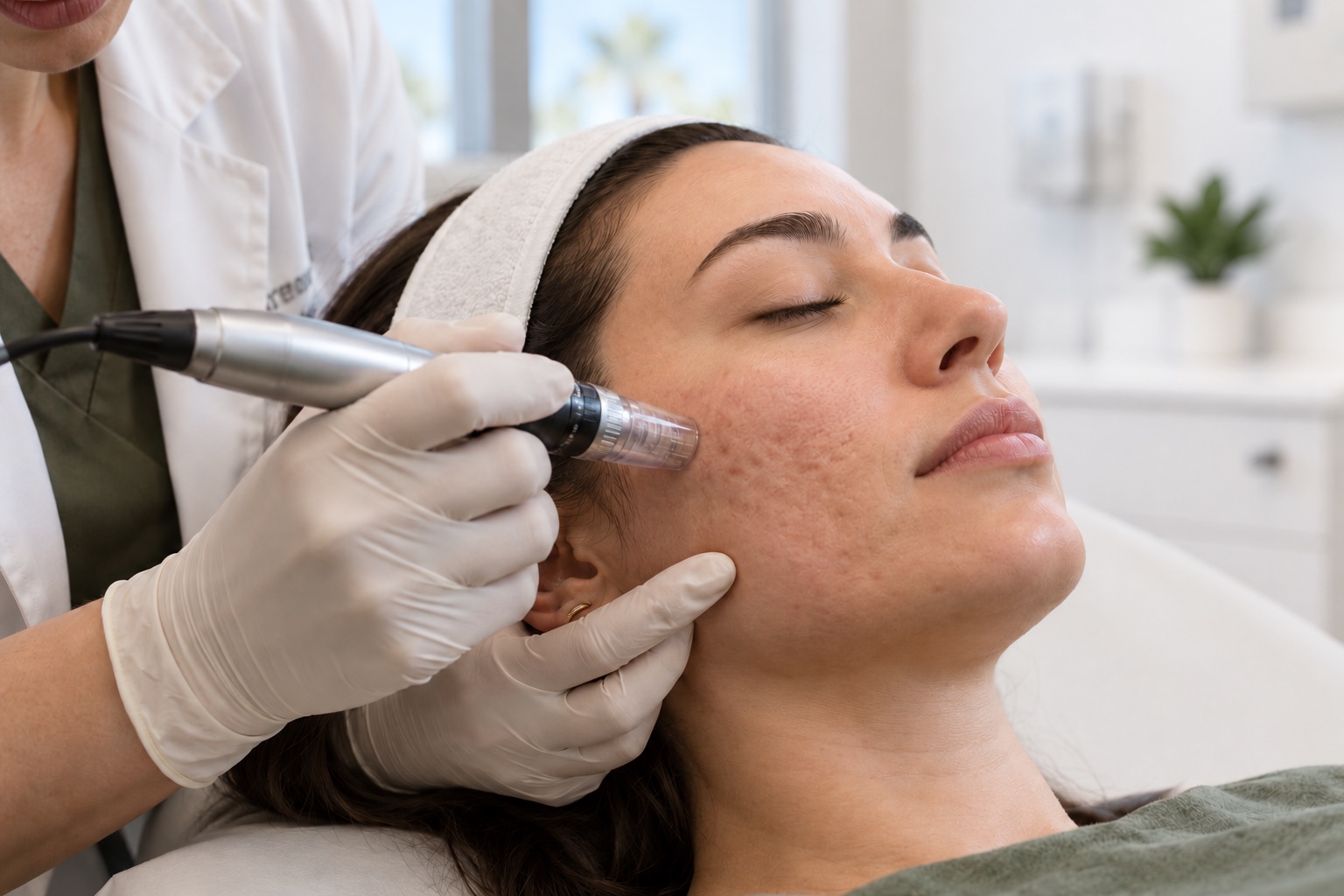
Controlled micro-injuries stimulate gradual collagen remodeling. Microneedling may help improve broader areas of shallow atrophic scarring and uneven texture.
Trichloroacetic acid is placed precisely inside selected narrow, deeper scars to encourage remodeling. Temporary crusting and pigment changes are possible, and careful patient selection matters.
A small instrument is passed beneath a depressed scar to release fibrous bands that pull the surface downward. It is most relevant for selected rolling or tethered scars.
Dermal filler can lift certain depressed scars and soften shadowing. Results and duration depend on the product, scar structure, and whether filler is combined with another technique.
Laser resurfacing can improve texture by creating controlled zones of skin remodeling. The device and treatment intensity must be chosen with skin tone, scar type, and acceptable downtime in mind.
Ongoing breakouts can create new scars and may affect the timing of procedural treatment. Your dermatologist may recommend addressing active acne before or alongside scar care.
Ice-pick, boxcar, rolling, and tethered scars behave differently. The examination determines which techniques may offer the most useful improvement.
Subcision, filler, TCA CROSS, microneedling, and laser treatment can play different roles. When combination care makes sense, the order and spacing are planned deliberately.

Scar treatment aims for meaningful improvement rather than perfectly smooth skin. Collagen remodeling develops gradually, and a series of treatments may be recommended. We will explain expected redness, swelling, crusting, bruising, pigment changes, and activity restrictions for the specific procedure being considered.
Bring details of prior acne and scar treatments, any history of keloids or pigment changes, current skin-care products and medications, and upcoming events that may affect your tolerance for downtime.
Start with an evaluation of the scars you have and the improvement that matters to you.